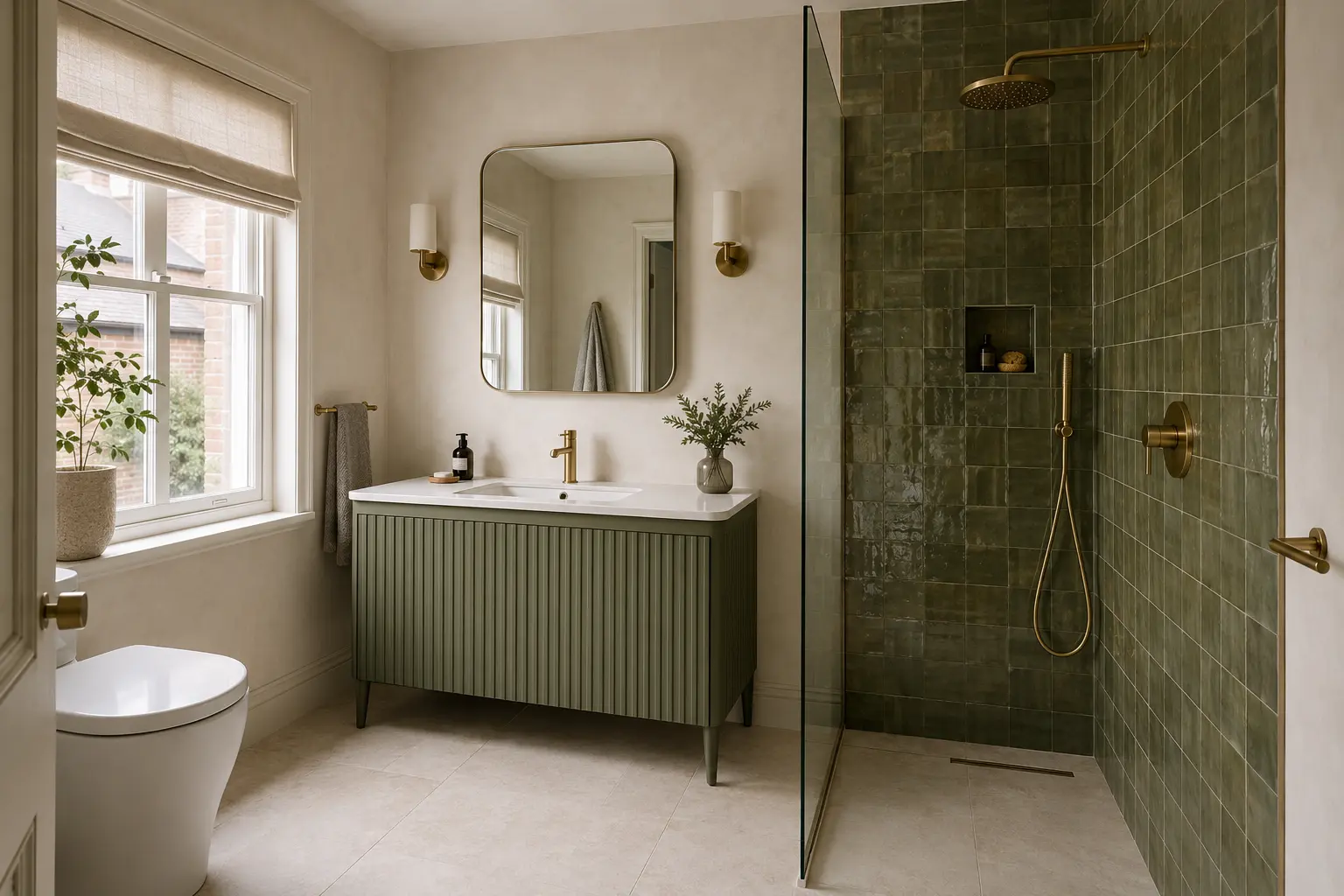
Choose materials for their exact position
A finish that suits a wall beside the basin may not be suitable inside a shower. Likewise, a wall tile is not automatically a floor tile. Start by listing the surfaces you are replacing and whether they receive direct spray, occasional splashes or mostly dry use. This keeps an attractive sample from being chosen for the wrong job.
Ask for the manufacturer's information for the exact product rather than relying on a broad label such as waterproof or bathroom suitable. The fitting method, joints and base can be just as important as the visible surface. Keep product details with the quote so substitutions can be checked before installation. Similar-looking finishes can have different care and fitting requirements.
Compare tiles with wall panels
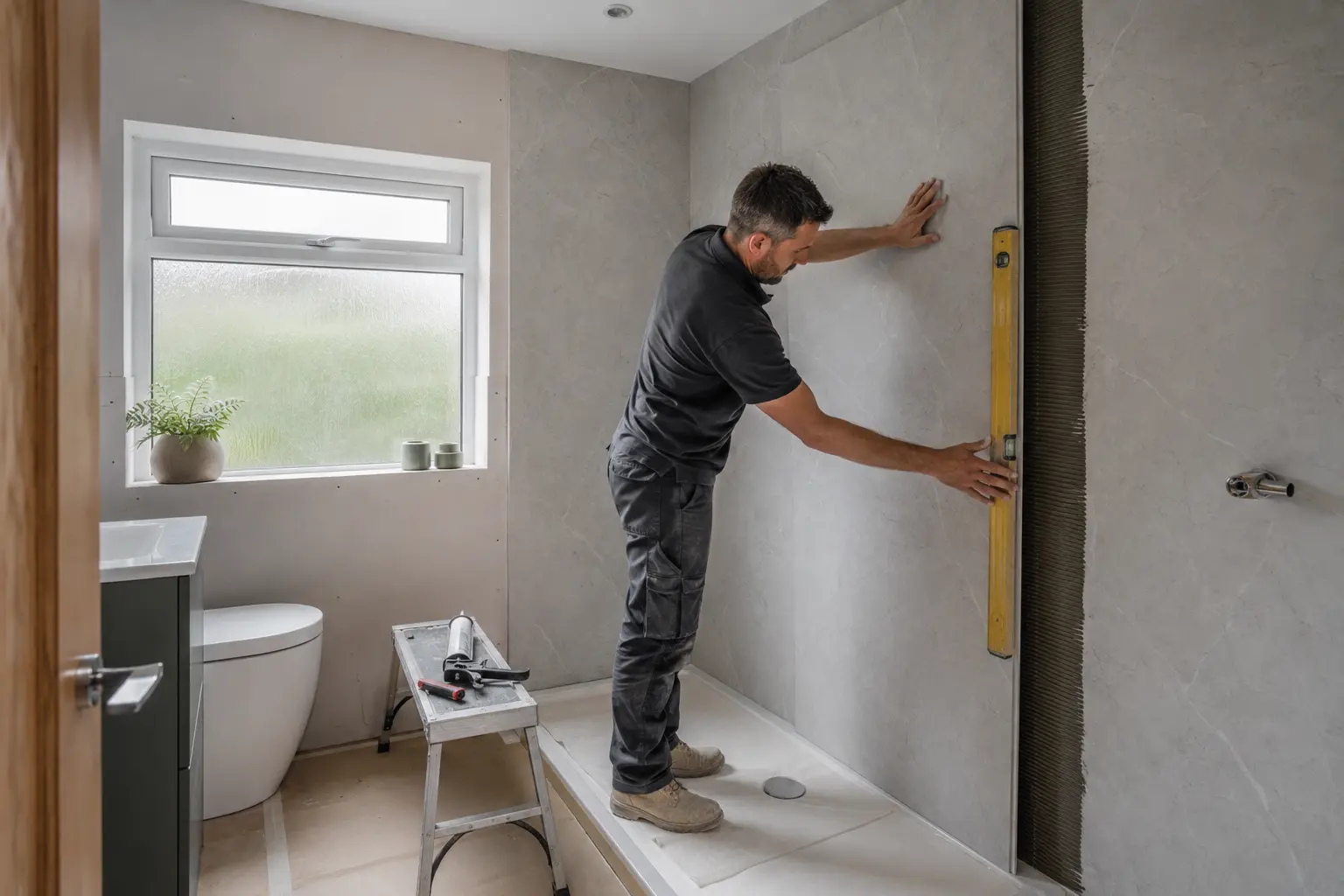
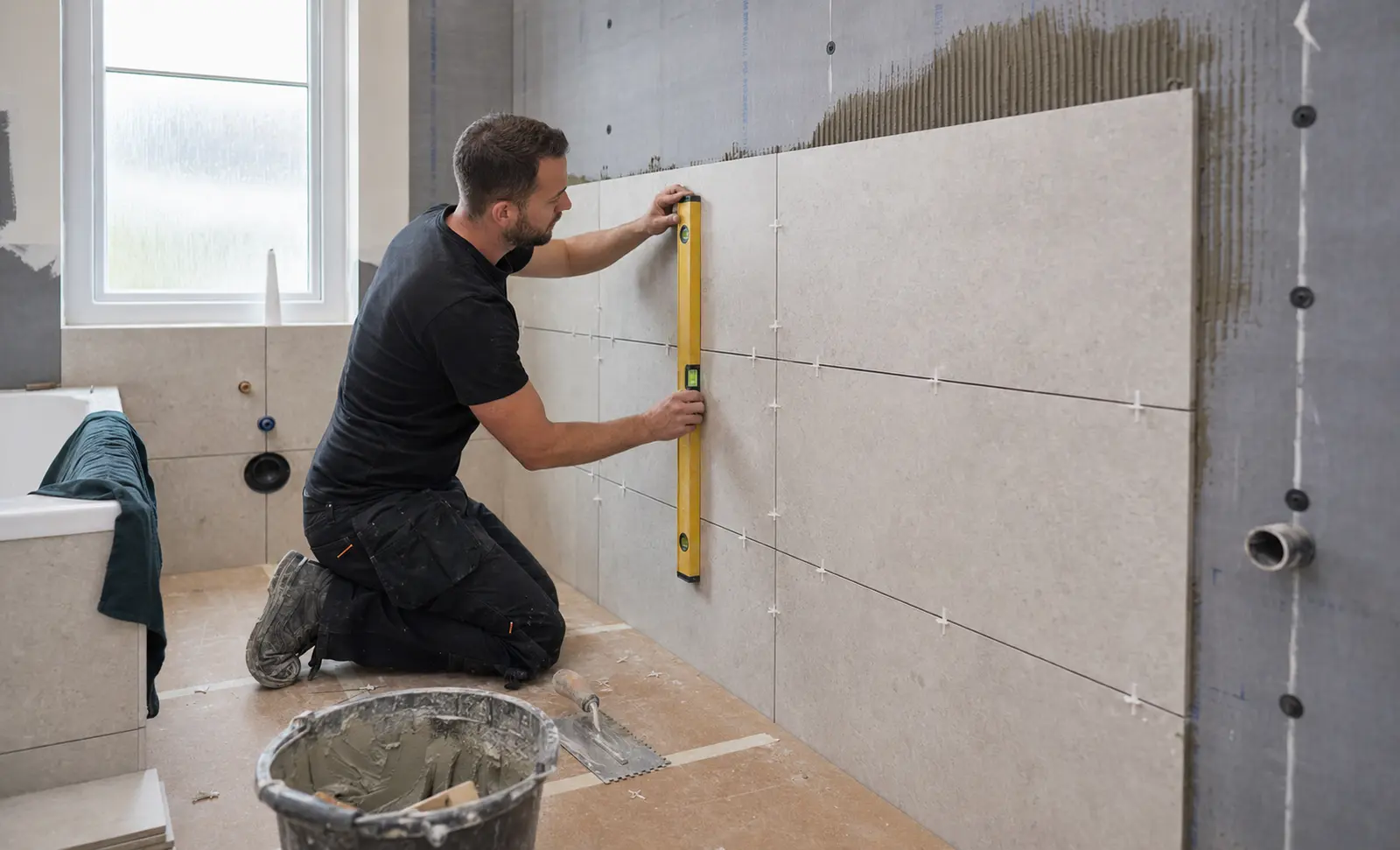
Tiles offer many sizes, colours and patterns, but their layout creates grout lines and cuts. Panels cover larger areas with fewer joints, though those joints and edges still need careful fitting. Compare the full fitted appearance around windows, corners, baths and shower trays. A small sample will not show where trims or joins will sit in your room.
Both choices need an appropriate base. Loose old tiles or damp plaster cannot simply be ignored beneath a new finish. Ask what preparation is included and which waterproofing system is required in the shower. Panels may be suitable over some existing tiled walls, but only where the condition and chosen system allow it. Keeping an unsuitable base is not a dependable saving.
For help with your room, see our Bathroom Design and Fitting in Belfast and request a home appointment.
Select flooring for wet feet and movement
Bathroom flooring has to work with the floor beneath it. A tiled finish needs suitable support and preparation; movement can damage tiles and joints. Bathroom-rated vinyl also needs the correct base and edge treatment. A product described as water resistant does not automatically waterproof the entire room or make it suitable for a wet-room shower floor.
Check suitability for the intended wet conditions and the people using the room. Look at cleaning instructions, grip information and how the floor meets the doorway. If underfloor heating is proposed, confirm compatibility with the exact product and fitting system. Avoid choosing purely by how a dry sample feels in your hand: the installed floor has a different job.
Check delivery and storage requirements
Some bathroom materials are heavy, fragile or awkward to carry through a house. Check that large panels, screens and furniture can reach the room before ordering. Agree a suitable storage place and who will inspect deliveries for damage. Keep protective packaging where appropriate until fitting. A material choice should work from delivery through installation and daily use; it is less useful if the selected size cannot pass the staircase or has nowhere safe to wait while preparation is completed.
Look inside bathroom furniture
A vanity's outside dimensions do not tell you how much useful storage it provides. Pipes and the basin can take space from drawers or cupboards. Check whether tall bottles fit and whether the doors open without hitting the toilet. A unit that holds your daily items may be more useful than a wider one with awkward internal spaces.
Ask how the furniture should be protected from standing water and which cleaners are suitable. Even bathroom furniture may have limits on prolonged soaking. Wall-hung units need suitable support, and all concealed connections need access for maintenance. Choose furniture as part of the measured layout, including the tap and basin, rather than treating it as a separate decorative purchase.
Match taps and shower finishes carefully
Chrome, black and brass-coloured fittings can look different between brands. If a coordinated finish matters, compare actual samples or the specified products together. Check whether all required accessories are available in the same finish, including wastes and shower controls. A photograph on a screen may not show a subtle colour or sheen difference accurately.
Care requirements can also differ. Some coated fittings can be damaged by abrasive cleaners or strong chemicals. Read the product guidance before choosing a finish for a busy bathroom. The shower itself must suit the home's water system; appearance does not establish compatibility. Confirm the required supply and installation details before buying a replacement based only on its shape or colour.
Make the final choices together
Bring wall, floor, furniture and tap samples into one comparison. Look at them in daylight and under the room's lighting where possible. Decide which surface is the main feature and keep enough simpler finishes around it. This can prevent a small bathroom feeling crowded by several competing patterns, without forcing you to choose an entirely plain room.
Record the exact products, colours, sizes, trims and grout choices before ordering. Confirm who supplies each item and who checks deliveries for damage or missing parts. Keep care instructions and spare matching materials where useful. The final choice should be something you like, can maintain and can have fitted correctly in the bathroom you actually have.