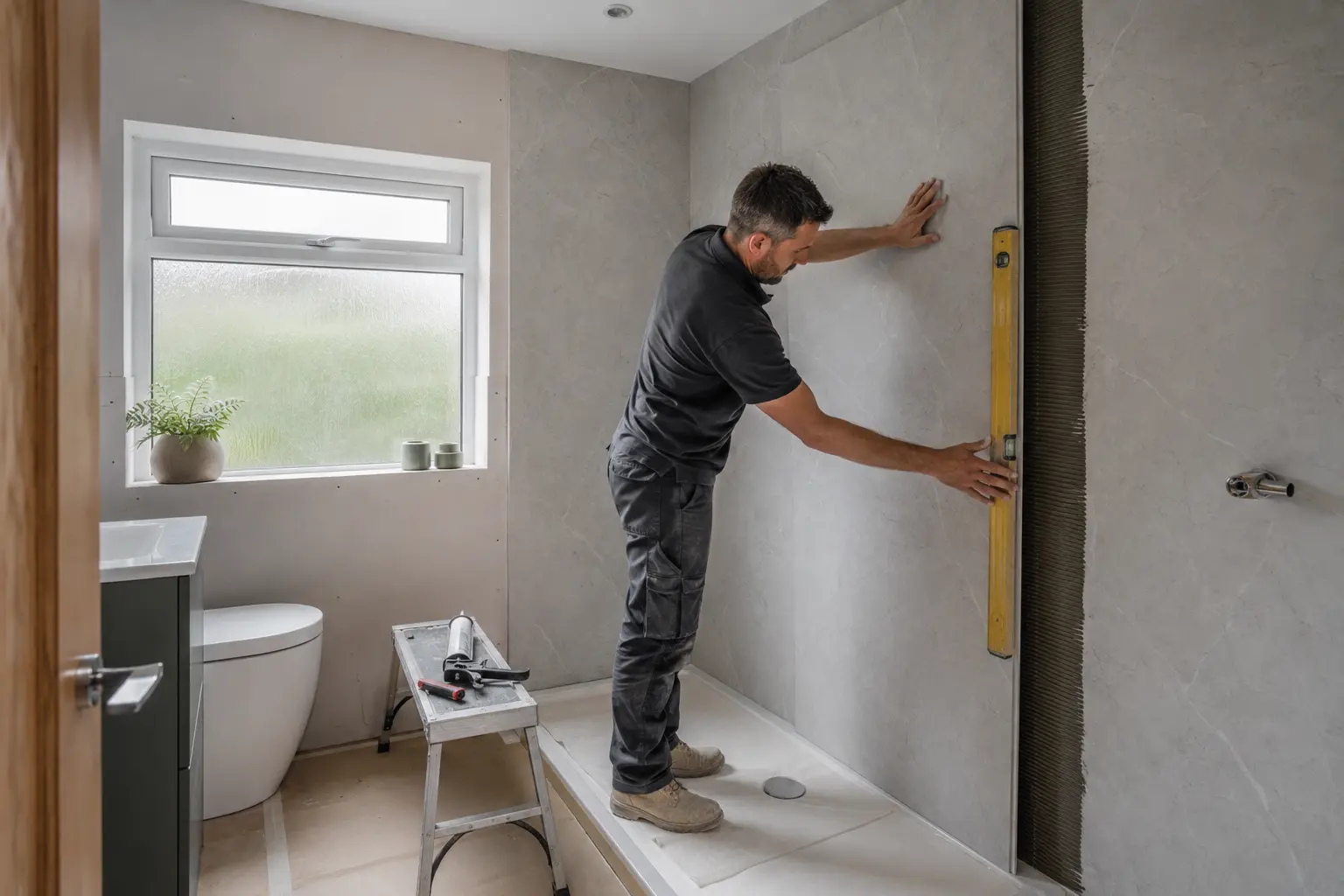
Compare a finished wall rather than a sample
Tiles and shower panels can both create attractive bathroom walls, but a sample shows only part of the result. Tiles create a pattern of individual pieces and grout lines. Panels cover larger areas with fewer joints, with trims or joining details depending on the system. Look at how each option will meet the shower tray, window and corners in your room.
Ask to see the proposed layout before ordering. A panel pattern may repeat across a wall, while a tile arrangement can create narrow cuts around an opening. These details influence the finished appearance as much as the colour itself. Choose from the complete fitted wall rather than assuming a small sample will look the same when repeated over a much larger area.
Check the condition behind the new finish
Both options need a base that meets the selected product's instructions. Loose tiles, weak plaster, damp material or an uneven wall may require removal or repair. Panels are sometimes fitted over existing tiles, but that depends on the condition and the system. Covering an unsuitable surface is not a reliable way to avoid necessary preparation.
Ask what the quote includes for checking and preparing the walls. Some conditions can be seen during the visit; others only become clear after removal. Agree how extra repairs will be explained and priced. A low material price can be misleading if the preparation required to fit it properly has been omitted from the comparison.
For help with your room, see our Bathroom Wall Panels in Belfast and request a home appointment.
Understand the waterproofing details
A shower wall has to deal with water at joints, corners and openings as well as across its main surface. Tiles and grout alone should not be treated as a complete waterproofing plan. The selected system determines what is required underneath and around the finished surface. Panel systems also rely on their specified joining and sealing methods.
Follow the manufacturer's installation instructions for the actual products being used. Mixing trims, adhesives or sealants without checking compatibility can create problems. Ask how the wall will meet the tray or bath and how pipe openings will be sealed. These are less visible decisions than the surface pattern, but they are essential to a dependable installation.
Think about cleaning and maintenance
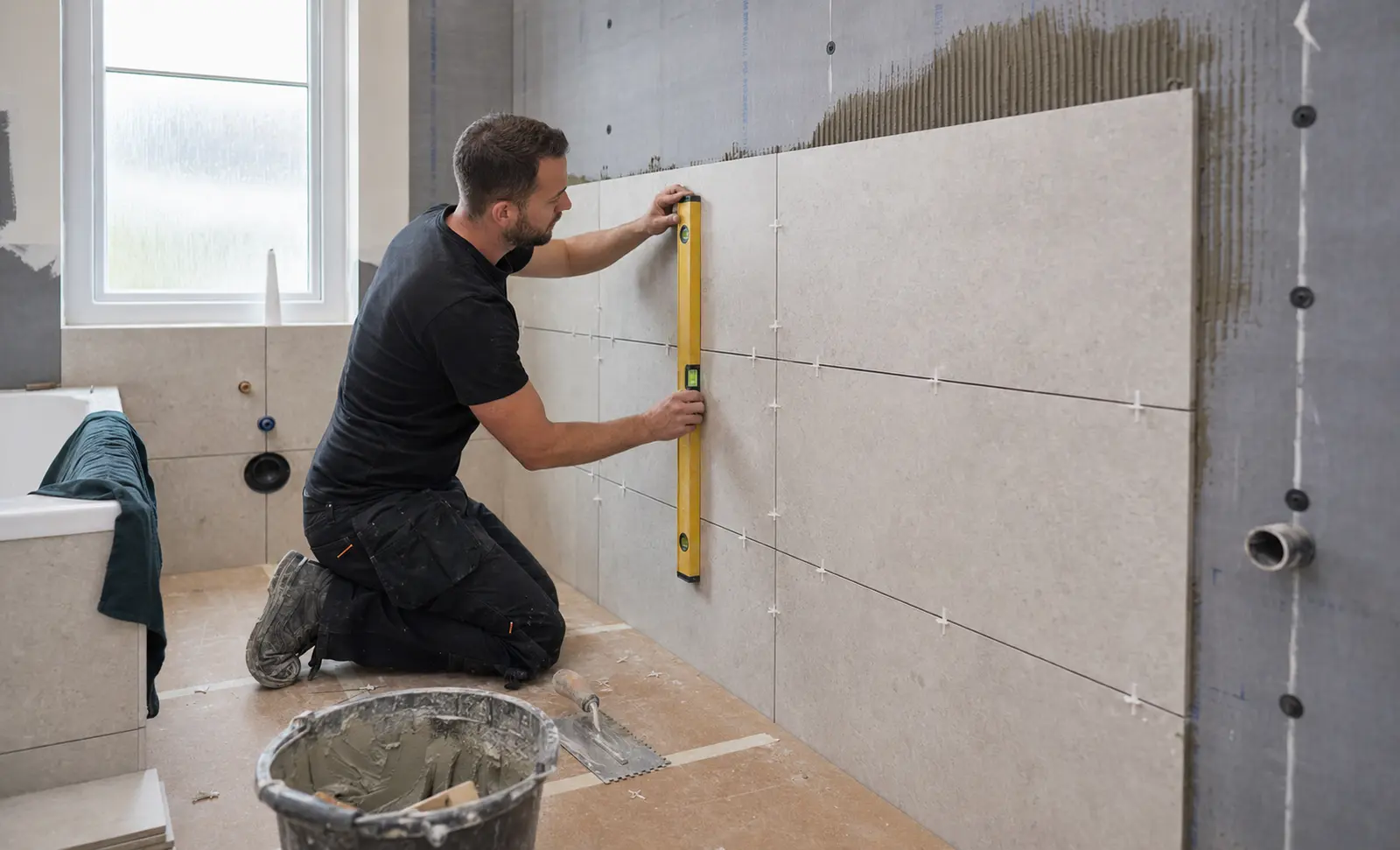
Panels generally have fewer joints to clean than a wall of small tiles. That does not make them maintenance-free. Edges and seals still need attention, and the panel face needs suitable cleaners. Tiles offer a range of surface textures, some of which can take more effort to clean than a smooth finish. Grout colour and joint layout also affect the appearance over time.
Read the care instructions before deciding. Strong or abrasive products can damage some surfaces and fittings. Choose a cleaning routine you can realistically follow, including regular checks of visible seals. A design that looks easy to maintain in a photograph may be less convenient if shelves, screens or furniture make the corners difficult to reach.
Compare cuts, trims and awkward corners
Windows, recessed shelves and sloping sections create extra decisions. Tiles can be cut into smaller pieces, but the layout needs planning to avoid unattractive strips. Panels may need joining or finishing profiles at edges and openings. Check the colour and width of those profiles alongside the main finish, because they will remain visible after fitting.
A recessed shelf should be planned as part of the waterproofing and wall construction, not added casually once the surface has been chosen. If the room has difficult shapes, ask which option can be fitted neatly and maintained afterwards. The simplest-looking result may require more preparation than expected, so compare labour and details as well as the material cost.
Consider future repairs and replacements
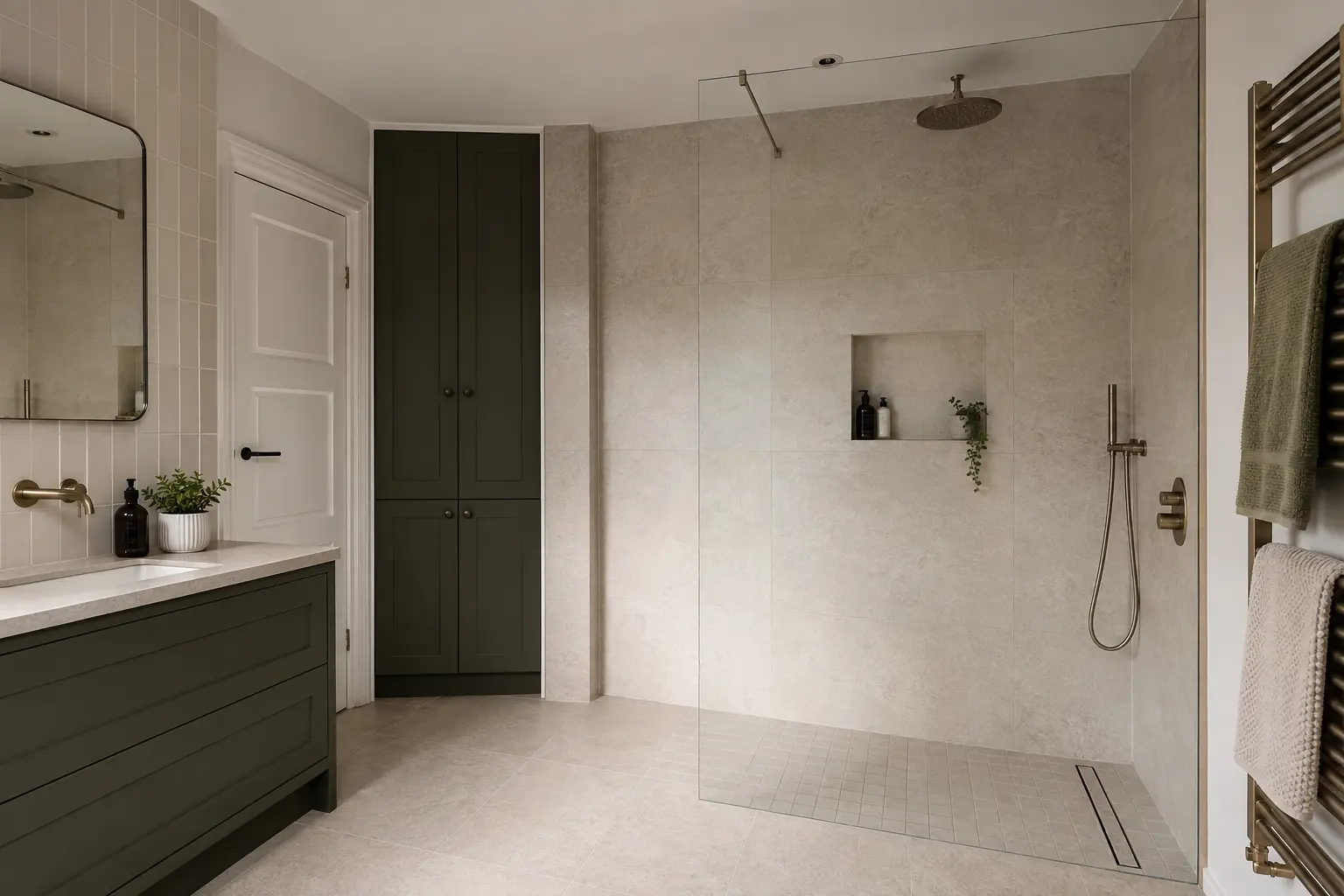
Keep product names, colours and spare matching materials where practical. If a tile is damaged later, a matching spare may help, although the repair still depends on the installation underneath. Replacing part of a panel system can involve a larger section or surrounding trims. Ask about repair access where concealed valves or pipes sit behind either finish.
Do not assume that a popular colour will remain available indefinitely or that products from different batches will match exactly. Record the exact product details with the quote. A removable access panel may be needed for certain fittings, and its position should be agreed before the wall is closed. Maintenance needs do not disappear because the finished surface looks continuous.
Compare the complete quote
Put the two options beside each other with the same room and work included. Check removal, wall preparation, waterproofing, materials, trims, adhesives, sealants and fitting. A panel price and a box-of-tiles price are not comparable project totals. Pattern complexity, wall condition and the number of openings can all affect the installed cost.
Choose the finish you like with a clear understanding of how it will be fitted and cared for. Confirm the products and details before the installation date so the correct materials can be ordered. At handover, ask when the shower can be used and how the surfaces should be cleaned. The right choice is one that suits the room and is installed as a complete system.
For one manufacturer's fitting and care requirements, see Multipanel's panel guidance. Use the instructions for your chosen system.