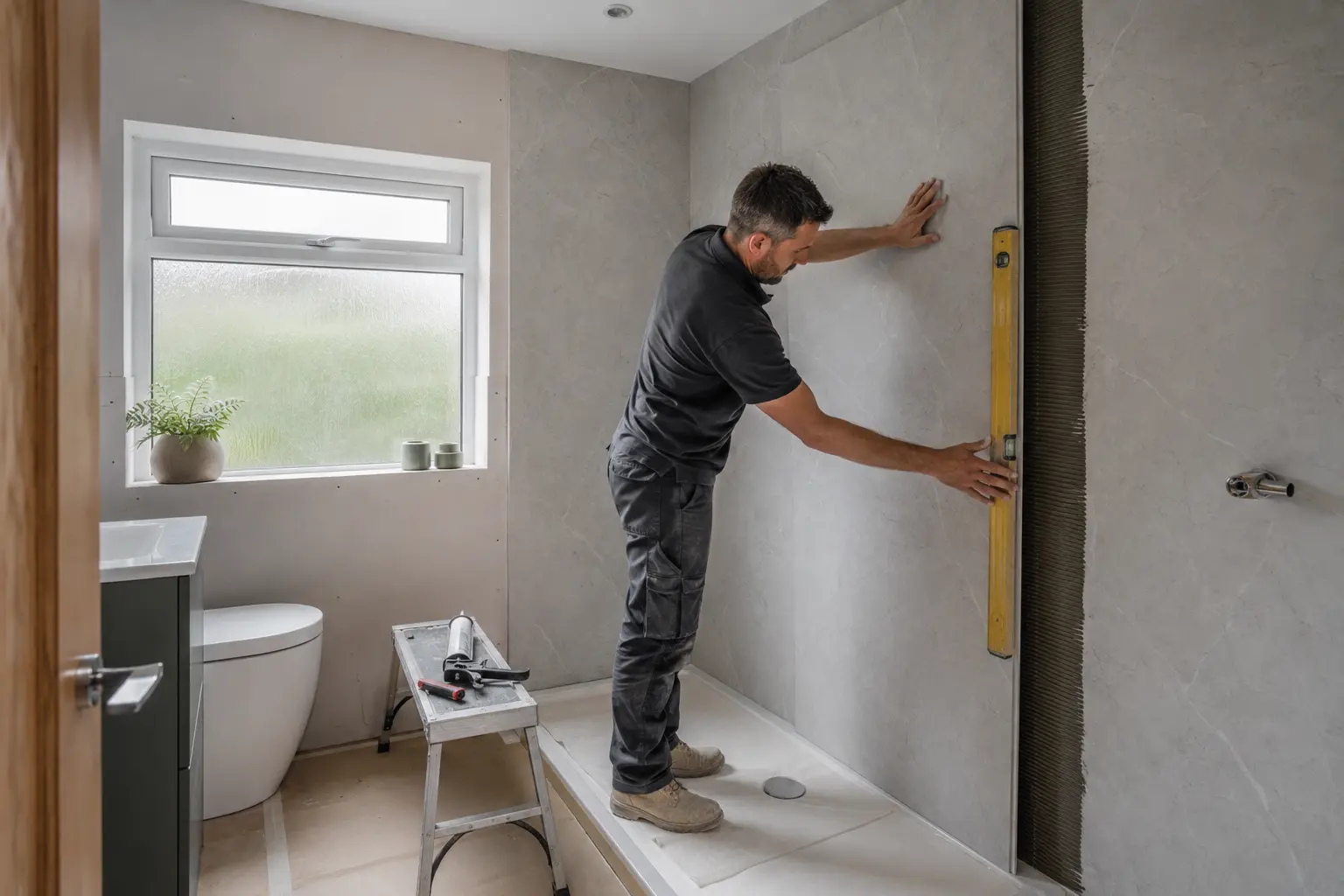
Check the instructions for the chosen system
Bathroom panels come in different materials and joining systems. A method suitable for one product may not be correct for another. Before fitting, identify the exact panel, trims used to join its edges, adhesives and sealants required by its manufacturer. Avoid treating all products sold as shower panels as if they share the same installation rules.
Ask the installer to show how the chosen system will work in your room. Where will panels join, which edges will be visible and how will corners be finished? These questions affect appearance as well as performance. Keeping the product information with the quote makes it easier to check that the fitted details match the selected system rather than a mixture of convenient substitutes.
Prepare the wall before covering it
The wall behind the panel needs to meet the product's requirements. Loose tiles, weak plaster, damp patches and uneven areas may need repair or removal. A broad new panel can hide these problems from view without solving them. Ask what preparation is included and what will happen if further damage is discovered after the old finish comes off.
Panels may be suitable over some existing tiled surfaces, but only where the condition and selected system allow it. Keeping old tiles should be a checked decision, not a shortcut assumed in advance. If there has been a leak, establish and address the cause before covering the wall. The panel joints cannot compensate for a failing or unsuitable base behind them.
For help with your room, see our Bathroom Wall Panels in Belfast and request a home appointment.
Plan the joins before cutting panels
Panel widths and patterns influence where the joints fall. A join beside the shower controls or through a prominent pattern can be more noticeable than one placed elsewhere. Look at the full wall layout, including windows and corners, before panels are cut. Confirm how any repeating pattern will be handled so expectations match what the product can provide.
The joining method may use a connecting trim or a shaped panel edge, depending on the system. Follow its instructions for preparation and sealing. A neat-looking joint is not proof that the correct hidden detail has been completed. Ask for any important installation requirements to be followed and recorded before they are concealed by the finished assembly.
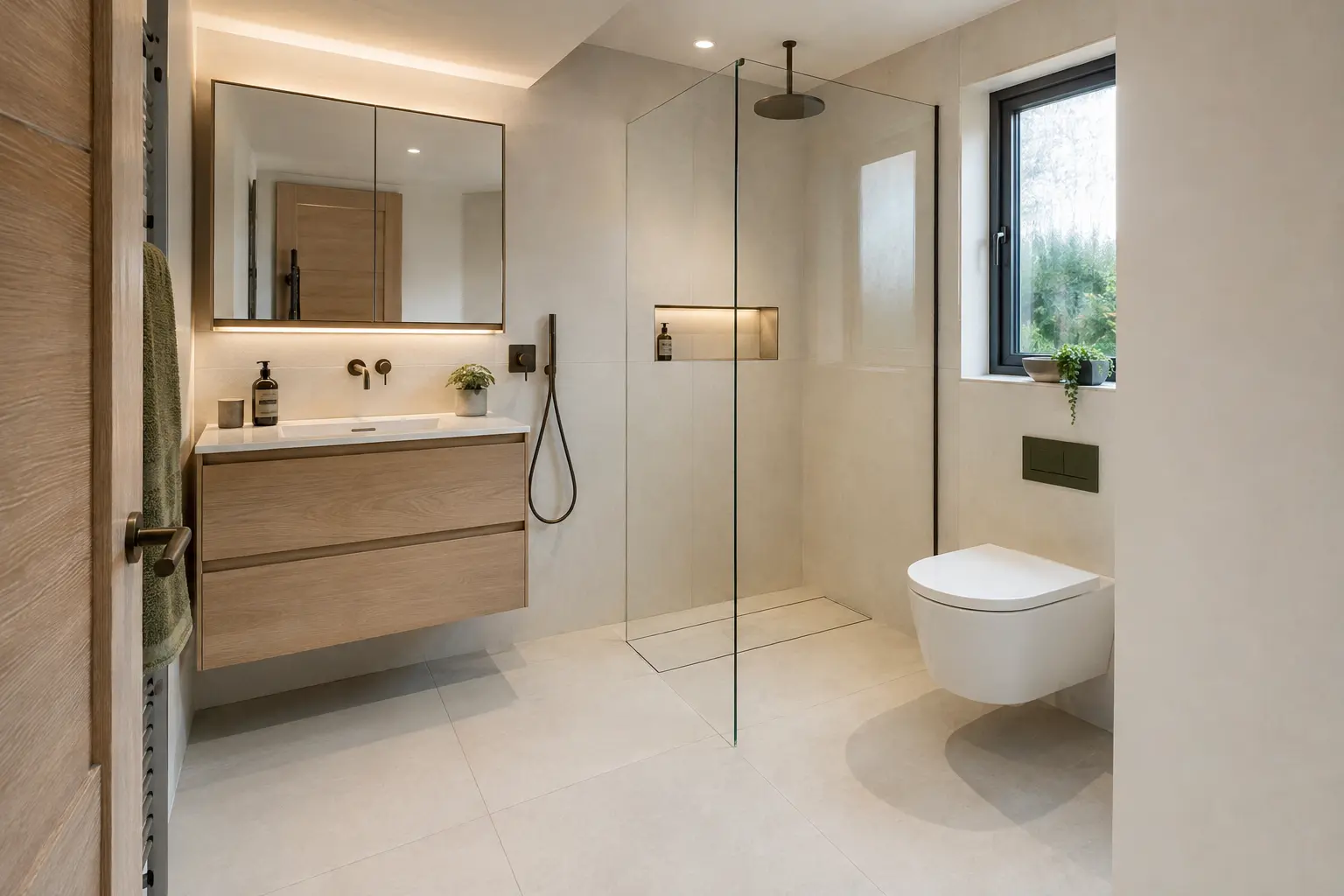
Pay attention to the bath or tray edge
The bottom of a shower panel meets an area that receives frequent water. The exact detail at a bath or tray depends on the products and installation system. Movement, support and sealing requirements must be considered together. Do not assume a large bead of sealant can correct any gap or make up for an unsuitable junction.
Have the bath or tray installed and supported as required before the wall finish is completed. Ask how the selected panels meet its edge and when the sealed area can be used. Curing instructions matter even when the surface appears dry. Using the shower too soon can undermine the work, so obtain a clear handover instruction for normal water use.
Seal openings and corners correctly
Pipes, shower controls and accessories create openings through the wall finish. These need the treatment required by the panel system and the fitting manufacturer. Corners and exposed edges have their own details as well. A waterproof panel face does not mean water cannot reach behind it through an untreated opening or incorrectly finished edge.
Plan accessory positions before drilling wherever possible. This helps avoid unnecessary holes or fixings in awkward places. Support for a rail or heavy fitting must be suitable behind the panel; the surface alone may not provide it. Keep access to concealed valves where required so a future repair does not depend on damaging a finished wall unnecessarily.
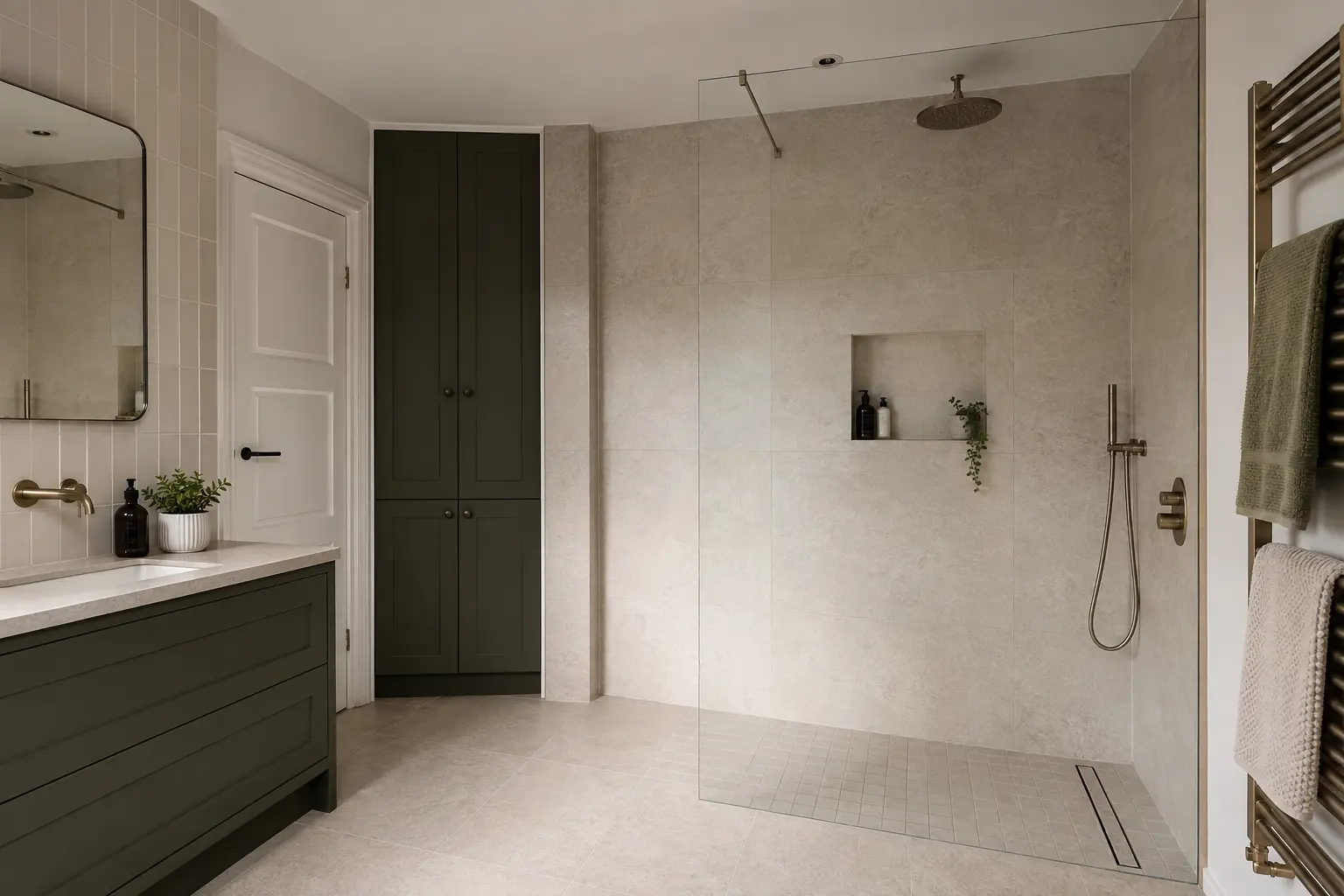
Use suitable cleaning products
Follow the panel manufacturer's care instructions and check the guidance for adjoining taps, screens and trims. Strong cleaners or abrasive tools can affect some surfaces and seals. Cleaning a panel system does not need to mean scrubbing every joint aggressively. A suitable routine should remove ordinary residue without damaging the materials that keep the wall working properly.
Keep an eye on changes such as an opening joint, a loose trim or damaged sealant. Do not simply cover recurring problems with another layer of material without understanding the cause. If water may be getting behind the finish, arrange an appropriate inspection. Early attention can be more useful than waiting until a visible patch appears elsewhere in the room.
Keep the fitting and care details
At handover, record the panel product, finish and relevant accessories. Keep any supplied warranty and installation information, along with the time before the shower can be used. Ask which maintenance tasks belong to the homeowner and when a fitter should be called. This makes later care less dependent on remembering a brief conversation at the end of the job.
If a joint needs repair later, use the correct method for the system rather than assuming any sealant will do. Describe where the issue is and whether it changes during shower use. A dependable panel installation combines a suitable wall, correct joining details and normal maintenance. The finish should be straightforward to live with, without pretending that it never needs attention.
For one manufacturer's fitting and care requirements, see Multipanel's panel guidance. Use the instructions for your chosen system.