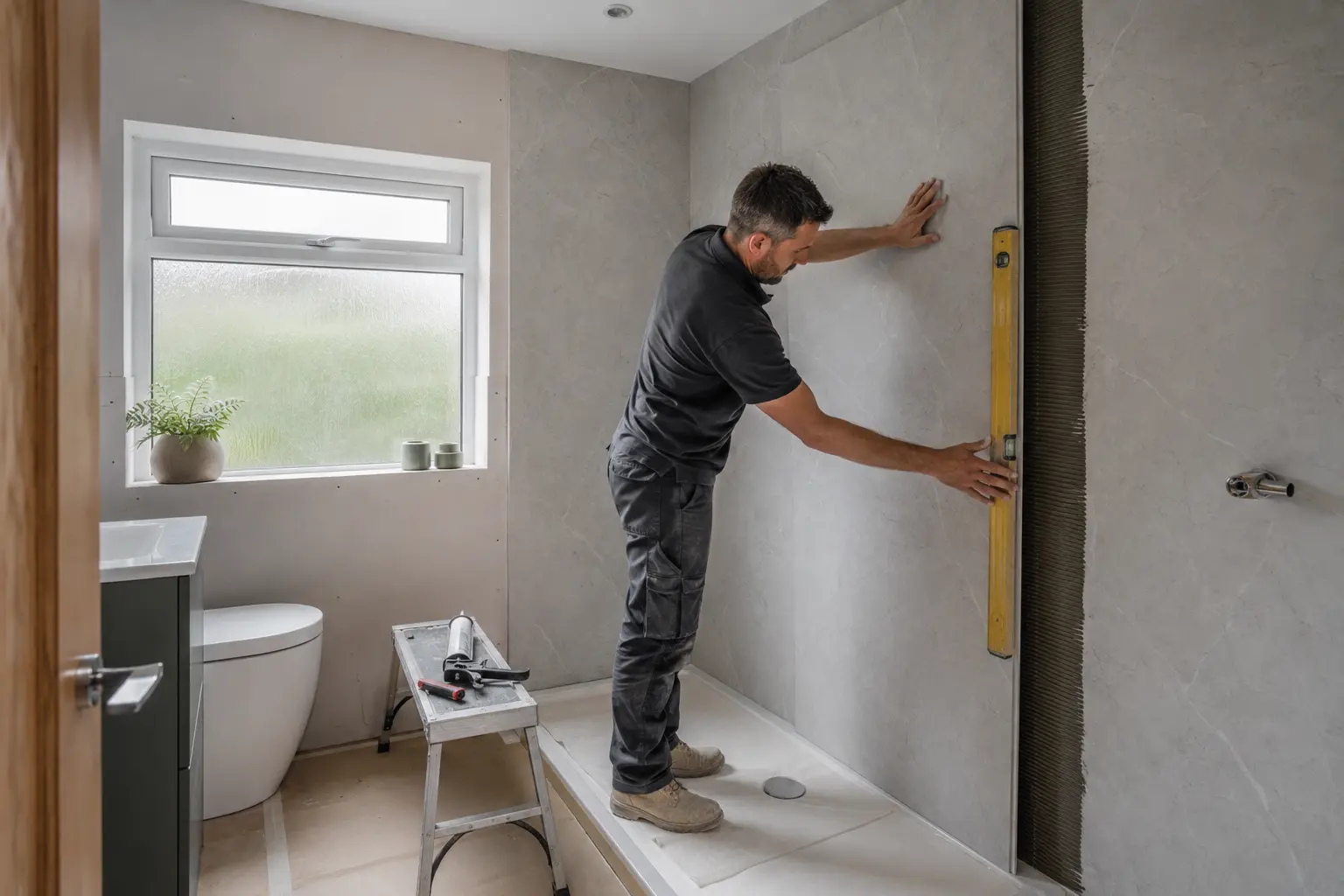
Clear a route through the house
The installer needs to carry out old fittings and bring in replacements, tools and materials. Check the route from the entrance to the bathroom, including narrow stairs and awkward corners. Move fragile objects, loose rugs and unnecessary furniture. Tell the installer about surfaces that need particular protection and ask what covering will be provided as part of the work.
A route suitable for a person may not be suitable for a large bath or panel. Check delivery access before ordering bulky products. Keep doors and shared passages usable, especially where other people live in the building. Agree where tools and materials can be left overnight so they do not become obstacles in the normal route through your home.
For help with your room, see our Bathroom Renovations in Belfast and request a home appointment.
Discuss dust and noise realistically
Removing tiles, cutting materials and preparing walls can create dust and noise. Ask how the work area will be separated and how nearby floors will be protected. These measures can reduce the spread, but a bathroom renovation should not be described as completely dust-free. Keep belongings that are easily damaged or difficult to clean away from the work route.
Agree working hours and let the installer know about any building rules or important household needs. You may need to arrange a quieter place for work calls or study during the noisiest tasks. Keep children and pets away from tools, open floors and stored materials. A closed bathroom door alone is not a substitute for a clear agreement about access to the work area.

Make space for products and waste
Bathroom products often arrive before they are ready to be fitted. Choose a dry, suitable storage area where boxes can be checked without blocking a hallway. Heavy items and fragile screens need appropriate handling, so ask where the installer wants them placed. Avoid unpacking everything into the bathroom if it will prevent removal and preparation from taking place.
Confirm how the old fittings and packaging will be taken away. Waste collection, loading access and any container arrangements should be clear in the quote. Do not assume that material left outside will be removed on the same day. Agree where it can safely remain in the meantime and keep the household's normal access and emergency routes clear.
Prepare the things you need each day
Empty cabinets and remove towels, toiletries, medicines and cleaning products before work starts. Put the essentials somewhere you can reach without entering the work area. If another bathroom is available, decide what needs to move there temporarily. A simple box for daily items can be more useful than repeatedly searching through packed cupboards while the room is being fitted.
Think about laundry, bathing children and anyone who needs help washing. These practical arrangements may matter more to the household than the appearance of the unfinished room. Ask when water will be turned off and what notice you will receive. Having a plan does not remove every inconvenience, but it makes the unavoidable parts easier to handle.
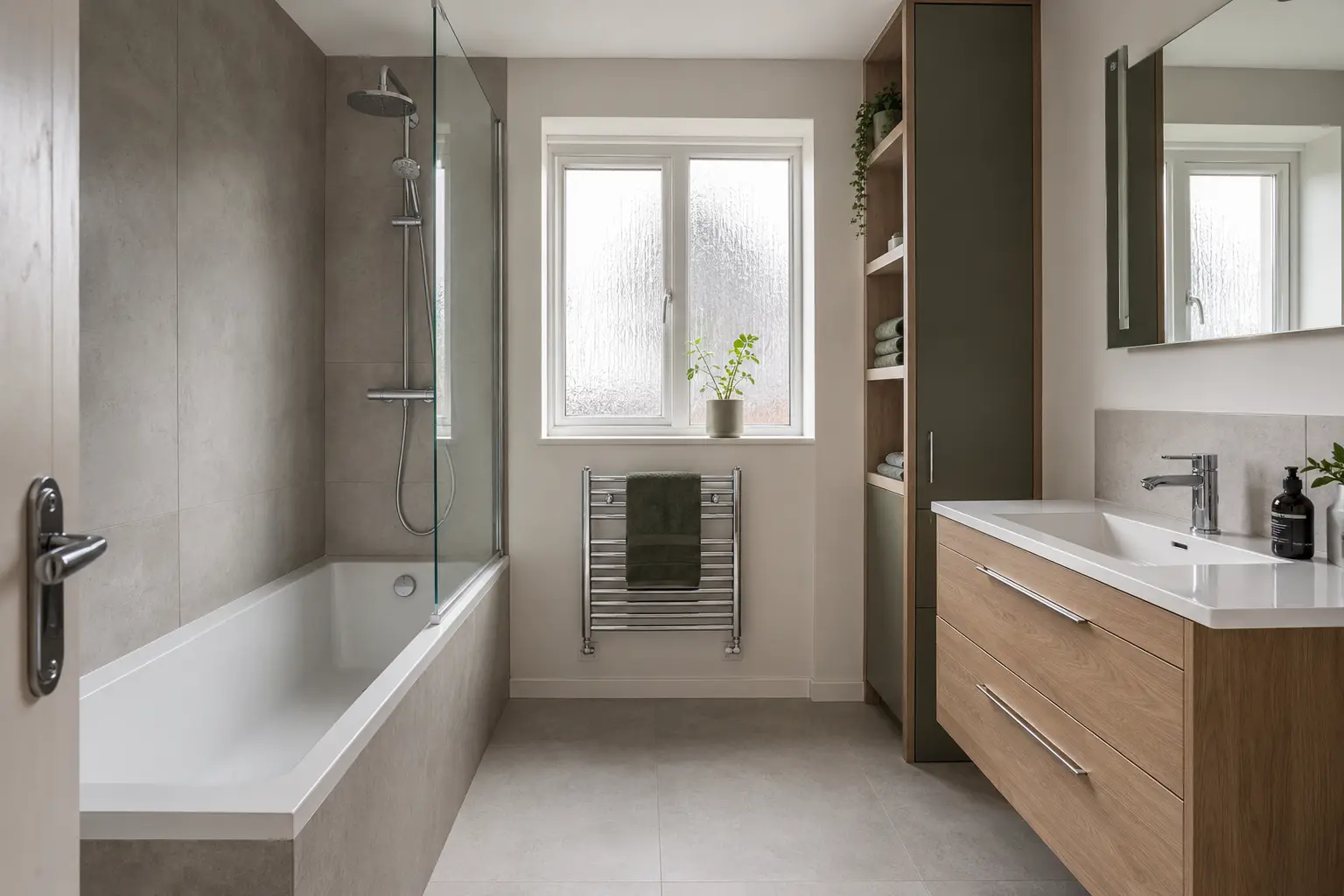
Keep decisions and changes easy to follow
Choose one way to record decisions about products, repairs and extra work. A short written confirmation with a price and any change to the schedule is easier to follow than several conversations with different people. Ask who your contact is for questions about the work, and when you can expect updates on the next stage.
If hidden damage appears, request an explanation of what was found and what needs doing before it is covered. Photographs can help make the problem clear. Avoid making rushed changes to the design simply because the room is already stripped out. Check whether a new choice affects ordered products, pipe positions or completion dates before agreeing to it.
Wait for permission to use new surfaces
At the end of fitting, the room may still need time before normal use. Sealants, adhesives and other materials must be allowed to cure according to their instructions. Ask when you can use the shower, walk normally on a new floor or clean newly fitted surfaces. Do not infer that a fitting is ready because it looks complete.
Go through the final checks and any remaining jobs before packing everything back into the bathroom. Keep care instructions and product details accessible. Report a leak, loose fitting or other problem promptly rather than continuing normal use and hoping it settles. A clear handover helps the household return to its routine without accidentally damaging work that has only just been completed.