Count what the bathroom actually holds
Before choosing storage, empty the existing cupboards and look at what is used in the bathroom every day. Separate daily toiletries from spare bottles, medicines, cleaning products and towels. Remove items that belong elsewhere. This gives you a realistic idea of the storage needed, rather than filling the plan with furniture simply because a wall appears empty.
Measure the taller bottles and any equipment that needs a particular home. Small drawers can look generous while failing to hold the things you own. Keep cleaning products stored appropriately for the household, particularly where children can reach them. The goal is not to put everything within arm's reach, but to put the right items in suitable places.
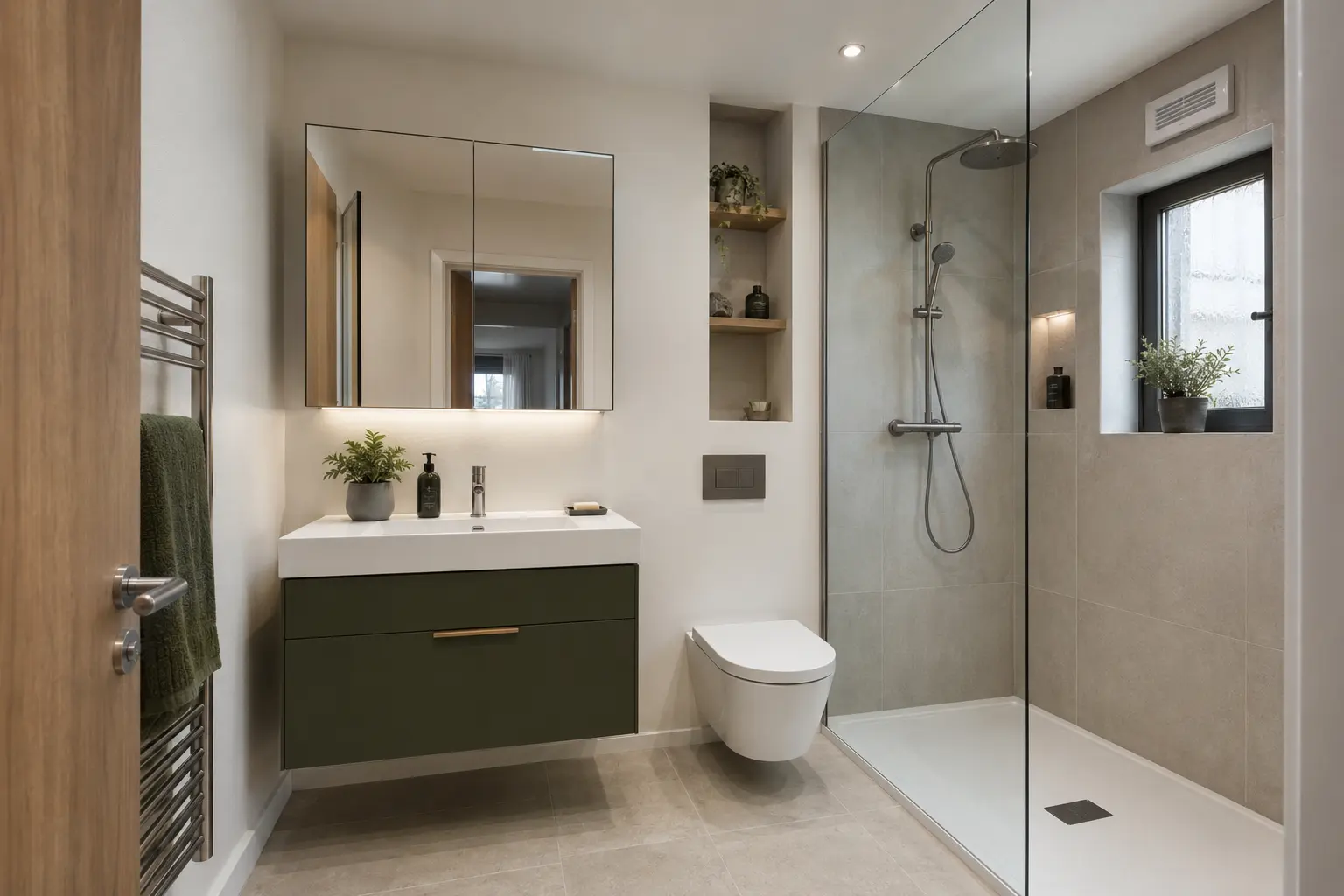
Look below the basin first
A vanity can make use of the space beneath the basin without adding another large object to the room. Compare the overall depth with the current basin and the route past it. A unit that projects further may reduce standing space at the toilet or shower. Open its drawers on the proposed plan to check for clashes.
Look inside the furniture rather than relying on the outside width. The basin and waste pipe may reduce usable space. Drawers can make small items easier to find, while cupboards may suit taller bottles. Check the care instructions and avoid allowing water to sit on edges or inside drawers. Bathroom furniture still needs to be used and maintained as its manufacturer describes.
For help with your room, see our Small Bathroom Fitting in Belfast and request a home appointment.
Use a mirror cabinet carefully
A mirror cabinet can hold daily toiletries above the basin, leaving floor space free. Its depth matters, especially above a shallow basin. Check that you can lean forward comfortably and open the cabinet without hitting a light, wall or adjacent shelf. The mirror also needs to sit at a useful height for the people using it.
If the cabinet includes lighting or electrical features, confirm suitable installation before ordering. A recessed model depends on what is inside the wall and cannot simply be cut into any surface. A surface-mounted cabinet may be easier to fit, but it still needs appropriate support. Choose the installation method from the room's construction rather than from a photograph alone.
Keep shower bottles off the floor
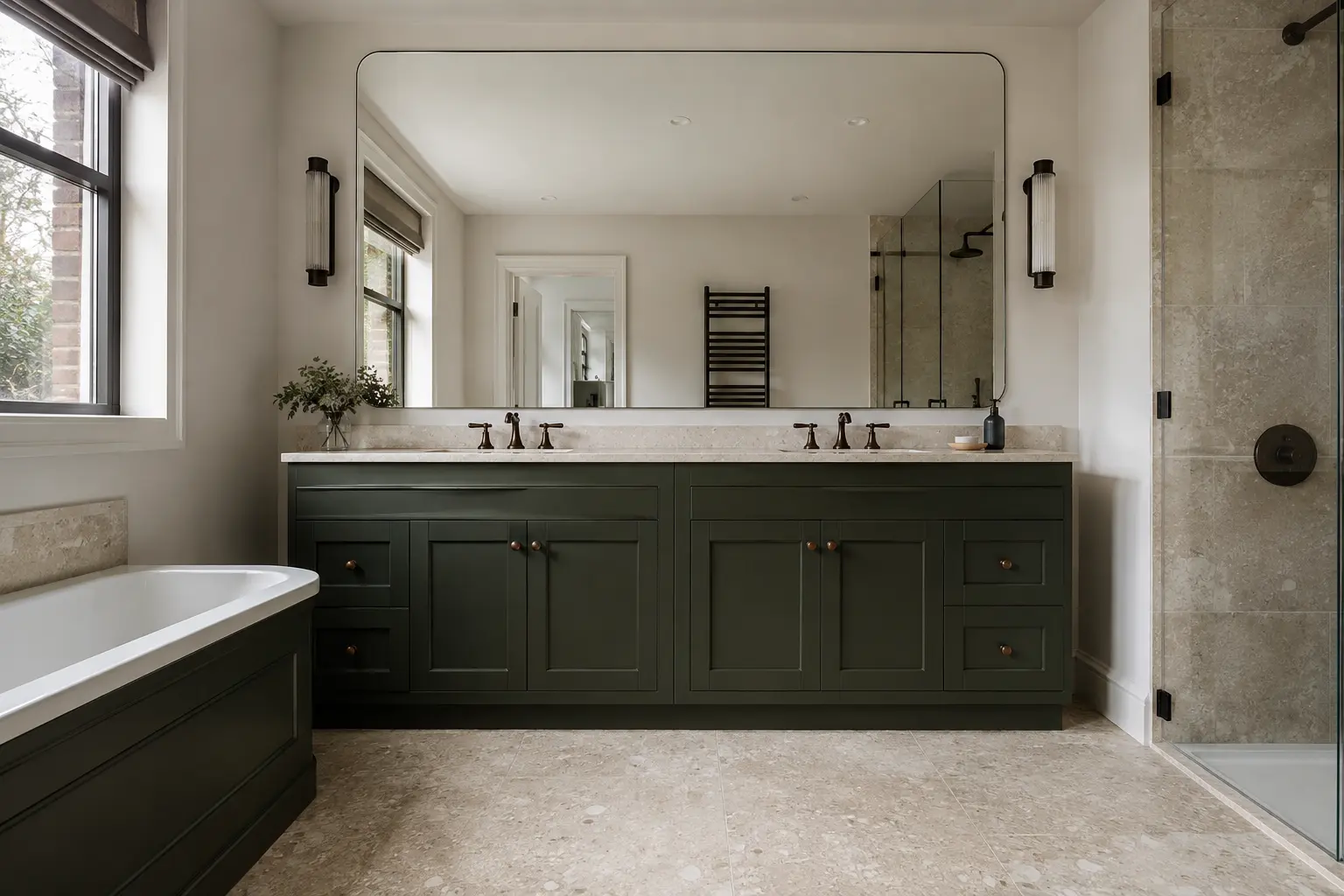
Bottles placed around the tray can get in the way and make cleaning harder. A reachable shelf can keep shampoo and soap close without obstructing the entrance. Check its depth and position while thinking about normal movement in the shower. Avoid a sharp projection where somebody could knock an arm or shoulder against it.
A shelf set into the shower wall can work where the wall allows it, but it needs the correct construction and waterproofing. It is not automatically the best solution in every bathroom. A suitable surface shelf may provide the same everyday benefit with less alteration. Whichever option is chosen, it should be easy to clean and large enough for the bottles actually used.
Give towels their own space
Towels need somewhere to hang after use as well as somewhere to be stored dry. Plan hooks or rails before every wall is filled with furniture. Check that a hanging towel will not cover a switch, block a cupboard or trail into the shower. The position should be reachable without an awkward stretch across the room.
A tall cupboard may hold spare towels but can make a small room feel narrow. If dry storage is available elsewhere in the home, the bathroom may only need space for current towels. This is a useful choice rather than a failure to fit enough furniture. Keep the room's washing and movement space more important than storing every spare item beside the bath.
Check shelves and narrow cupboards in use
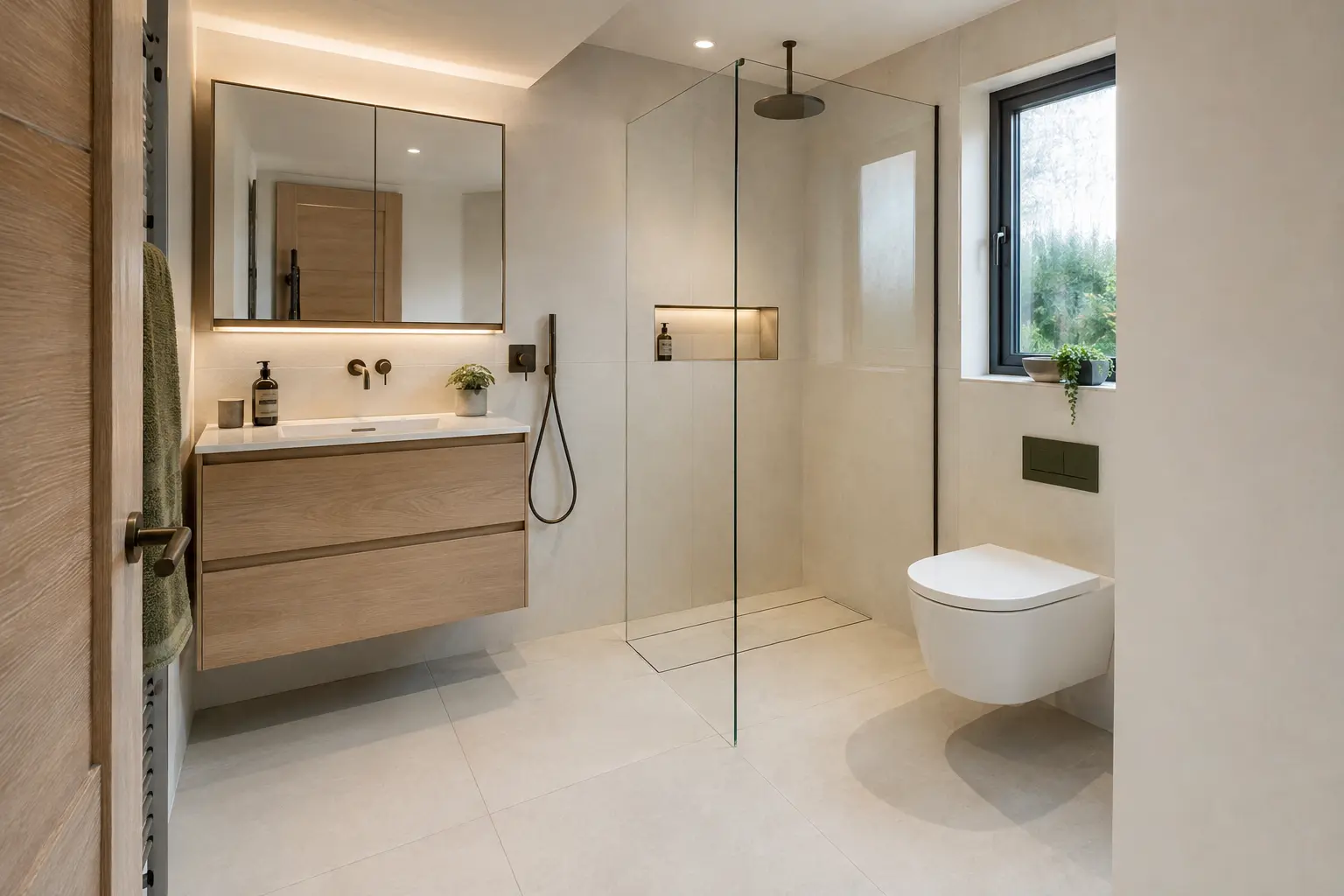
Slim storage can fit into gaps, but a gap is not always a useful place for a cupboard. Check the door opening and whether you can reach inside without bending around the toilet. Open shelves are easy to reach but leave their contents visible and exposed to dust or splashes. Use them for suitable items rather than as a substitute for all closed storage.
Keep cleaning access in mind. A very narrow gap between furniture and a wall may collect dirt without allowing a cloth or hand to reach it. Filling that gap neatly or changing the furniture size may be better than leaving an inaccessible strip. The fitted dimensions and edge details matter more than the advertised width alone.
Test the storage against a normal morning
Imagine reaching for toothpaste, taking a shower, drying yourself and putting things away. Each action should work without moving several other items first. If one person is at the basin, check whether the rest of the room remains usable. Small bathrooms benefit from storage that supports these routines rather than a large quantity of cupboards.
Take the final furniture dimensions to the installer before ordering. Confirm fixing support, pipe access and the position of towel rails and shelves. Keep enough clear floor space for comfortable washing and cleaning. A successful storage plan makes the room easier to use every day; it does not simply hide clutter by making the bathroom harder to move around.